


DETAIL OF SITE
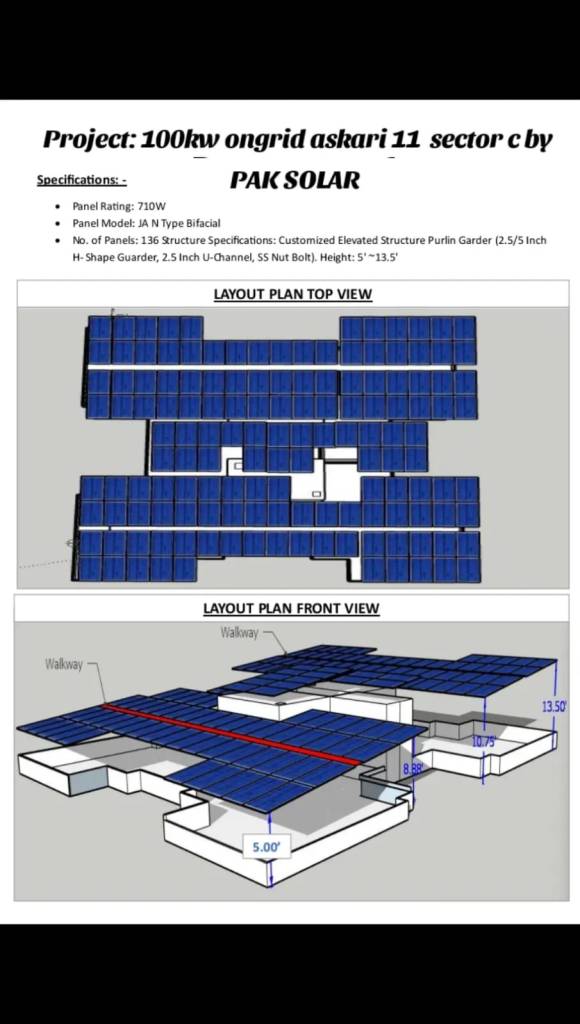
Establishing a hybrid solar site that utilizes both on-grid and off-grid capabilities requires a sophisticated balance of power electronics, high-efficiency photovoltaics, and specialized motor control systems. Your setup—featuring the ultra-high-power JA Solar 710W modules, a Sofar on-grid inverter, and an INVT Variable Frequency Drive (VFD)—is a robust industrial-grade configuration designed for versatility.
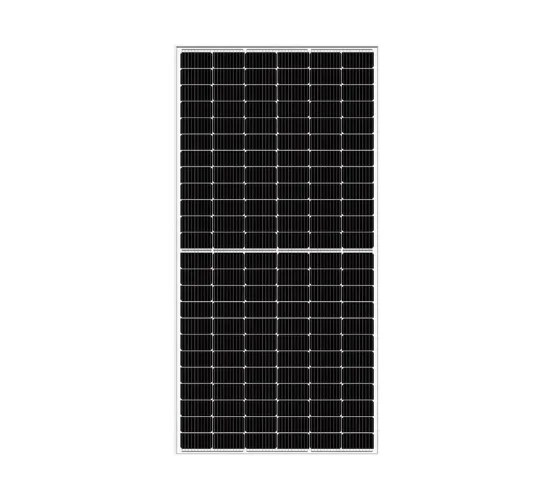
JA Solar 710W N-Type Bifacial Panel
The JA Solar 710W N-Type Bifacial Panel offers groundbreaking 22.5% efficiency, bifacial output, and N-Type TOPCon technology—engineered for maximum performance and lowest degradation in demanding environments.
Specifications
- Brand: JA Solar
- Model: JAM72D40-710/GB
- Rated Power Output: 710W
- Cell Type: N-Type TOPCon Monocrystalline
- Bifacial Gain: Up to 80% (Backside Power)
- Module Efficiency: 22.5%
- Cell Configuration: 144 Half-Cells (6×24)
- Dimensions: 2384 × 1134 × 30 mm
- Weight: 37.5 kg
- Front/Back Glass: Dual 2.0mm Tempered Glass (AR Coated)
- Frame Material: Anodized Aluminum Alloy
- Junction Box: IP68 Rated, Split Type
- Connector Type: MC4 or Compatible
- Operating Temperature: -40°C to +85°C
- Power Tolerance: 0 ~ +5W
- Wind Load / Snow Load: 2400 Pa / 5400 Pa
- Warranty: 12-Year Product | 30-Year Linear Output Performance
The Core Component: JA Solar 710W Bi-Facial/Mono PERC Modules
The foundation of your 100kW site is the JA Solar 710W module. These are likely based on the MBB (Multi-Busbar) and Half-Cut Cell technology. At 710W per panel, you are using some of the highest wattage modules available in the market, which significantly reduces the “Balance of System” (BOS) costs—meaning you need fewer rails, fewer clamps, and less cabling to reach your 100kW target.
For a 100kW system, you will be deploying approximately 140 to 142 panels. These panels convert photon energy into Direct Current (DC) electricity via the photovoltaic effect. Given the high current output of 710W modules (often exceeding 17A at peak), your string sizing must be calculated carefully to ensure the Voc (Open Circuit Voltage) does not exceed the input threshold of your Sofar inverter or the INVT VFD.
On-Grid Operation: The Sofar Inverter Logic
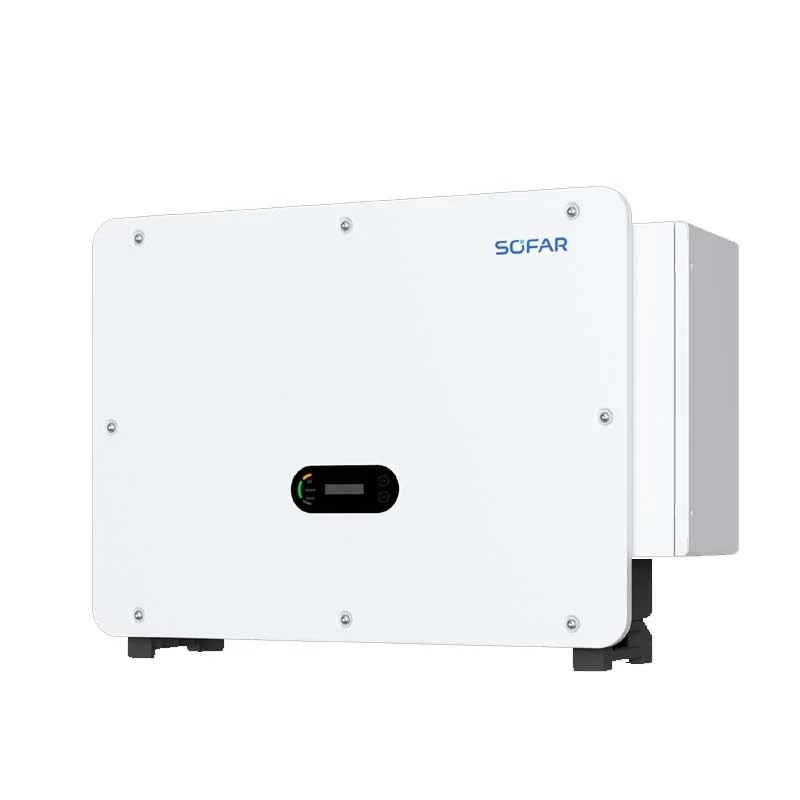
Specifications
Manufacturer Sofar
Model 100KTLX-G4
Inverter type String inverter
Number of phases 3
Sine wave shape Pure sine wave
Maximum input voltage (V) 1100
Nominal input voltage of photovoltaic modules (V) 625
Start-up Voltage (V) 200
MPPT Voltage Range (V) 180-1000
Maximum input current of photovoltaic system (A) 10*40А
Maximum short circuit current (A) 10*50А
Number of MPPT 10
Number of strings on MPPT 20
Rated AC Output Active Power  100000
Max AC Output Active Power 100000
Nominal output voltage (V) 380/400/415
Nominal AC frequency (Hz) 50/60
Max. AC Output Current (A) 152A 380V/145A 400V / 139.2A 415V
Maximum efficiency (%) 98.6%
European efficiency (%) 98.3%
Display presence
+
Cooling type
Smart air cooling
Communication with BMS
RS485/WiFi
Minimum operating temperature (‘C)
-30℃
Maximum operating temperature (‘C)
+60℃
Protection class (IP)
IP66
Weight (kg)
75,0
Warranty
5 years
During standard operation when the utility grid is available, the system functions as a grid-tied power plant. The Sofar on-grid inverter acts as the brain of this phase. Its primary job is Maximum Power Point Tracking (MPPT) and DC-to-AC conversion.
- Synchronization: The Sofar inverter monitors the grid’s voltage and frequency ($50Hz$ or $60Hz$). It converts the DC power from the JA Solar panels into high-quality AC power that is perfectly “in phase” with the utility.
- Net Metering: If the 100kW production exceeds the local demand of your facility, the excess energy is exported back to the grid.
- Efficiency: Modern Sofar inverters typically boast efficiencies over 98%, ensuring that minimal energy is lost during the conversion process.
Off-Grid/Direct Drive Operation: The INVT VFD
The most unique aspect of your system is the inclusion of an INVT VFD for off-grid application. In many industrial or agricultural setups (like solar pumping or heavy machinery), the VFD is used to drive AC motors directly from solar power without the need for expensive battery banks.
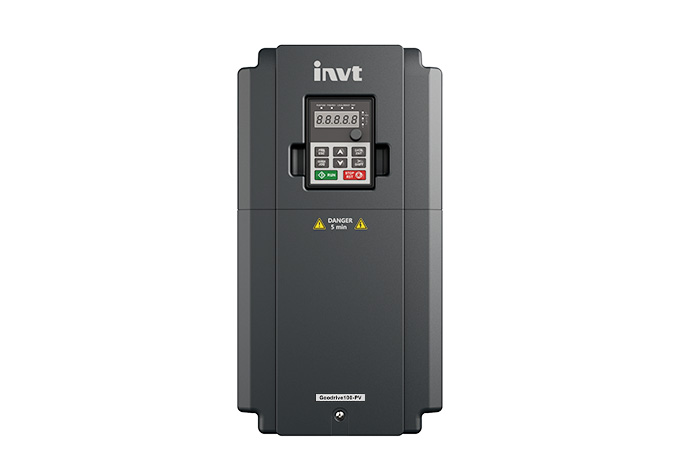
Technical Specifications for the 75kW/93kW Model:
- Power Rating: 75kW (Continuous) / 93kW (Peak/Heavy Duty).
- Input Voltage (DC): Supports a wide range, typically up to 800V DC (Max). It is designed to take the high-voltage string directly from your JA Solar 710W panels.
- Output (AC): 3-Phase AC (380V/400V/415V/440V).
- MPPT Efficiency: Built-in solar MPPT software with up to 99% efficiency, ensuring the motor gets the most torque possible even in low sunlight.
How it works with your 710W JA Solar Panels:
- Direct Drive: Unlike the Sofar inverter which feeds the grid, the INVT VFD takes the DC power and converts it into a variable frequency AC output. This allows you to start a 75kW motor (like a water pump or industrial fan) without needing a huge battery bank.
- Soft Start: The VFD prevents “Voltage Dip” on your site. It slowly ramps up the frequency (from 0Hz to 50Hz/60Hz), which is critical because your 710W panels produce a limited current. Without a VFD, a 75kW motor would try to pull too much current at once and collapse the solar voltage.
- Automatic Operation: It can start automatically at sunrise and stop at sunset. If a cloud passes over your JA Solar array, the VFD will automatically slow the motor down instead of tripping out, and then speed it back up when the sun returns.
Role in your “Hybrid” System:
In your specific 100kW setup, you likely have a Changeover Switch.
- In “On-Grid” mode: Your JA Solar panels feed the Sofar Inverter to save on electricity bills.
- In “Off-Grid/Motor” mode: You flip the switch, and the power is diverted to this INVT VFD to run your heavy machinery directly from the sun, making the system functional even if the utility grid is down.
How the VFD works in this context:
- DC Input: The VFD takes the high-voltage DC string directly from the JA Solar panels (or via a changeover switch from the Sofar system).
- Solar VFD Firmware: INVT drives specialized for solar contain “Solar MPPT” firmware. Unlike a standard VFD that expects a stable AC grid, this VFD constantly adjusts the motor speed based on the available sunlight.
- Soft Starting: One of the biggest advantages of the INVT VFD is its ability to manage “Inrush Current.” When a motor starts, it can pull 5-7 times its rated current. The VFD ramps the frequency up slowly, allowing your 100kW solar array to start heavy loads without tripping the system.
The Dual-System Architecture (Changeover Logic)
To make this work as both an on-grid and off-grid system, you likely utilize a DC or AC Changeover Switch or a synchronized control panel.
- Mode A (On-Grid): The PV strings are routed to the Sofar Inverter. The facility runs on solar, and the grid provides backup or absorbs excess. The VFD may be powered by the AC output of the inverter/grid.
- Mode B (Off-Grid/VFD Direct): In the event of a grid failure or a specific need to run a dedicated heavy load (like a 75kW pump), the system can be isolated. The PV array is routed directly to the INVT VFD. This is “Solar Direct Drive.” The VFD uses the DC power to create a variable AC output, powering the motor independently of the utility company.
Safety and Protection Mechanisms
Operating a 100kW site involves high voltages (often up to $1000V$ DC). Your system includes several layers of protection:
- Surge Protection (SPD): Both the Sofar and INVT units have internal SPDs to protect against lightning and switching surges.
- Anti-Islanding: The Sofar inverter has a mandatory safety feature where it shuts down during a grid outage to prevent feeding electricity into a “dead” grid, which could endanger utility workers.
- Overload & Short Circuit: The INVT VFD protects the motor from phase loss, under-voltage, and over-current.
Summary of Workflow
- Generation: JA Solar 710W panels capture sunlight and produce DC.
- Conversion (Grid-on): Sofar Inverter converts DC to AC, powering the site and syncing with the utility.
- Conversion (Off-grid): INVT VFD takes DC directly to run motors/machinery, adjusting speed based on solar intensity (MPPT).
- Distribution: Power is used locally, stored (if batteries are added later), or exported to the grid.
This hybrid approach ensures that you have the financial benefits of net metering through the Sofar inverter while maintaining the industrial reliability of the INVT VFD for heavy-duty mechanical loads when the grid is unreliable.
 PAK SOLAR SOLUTIONS